
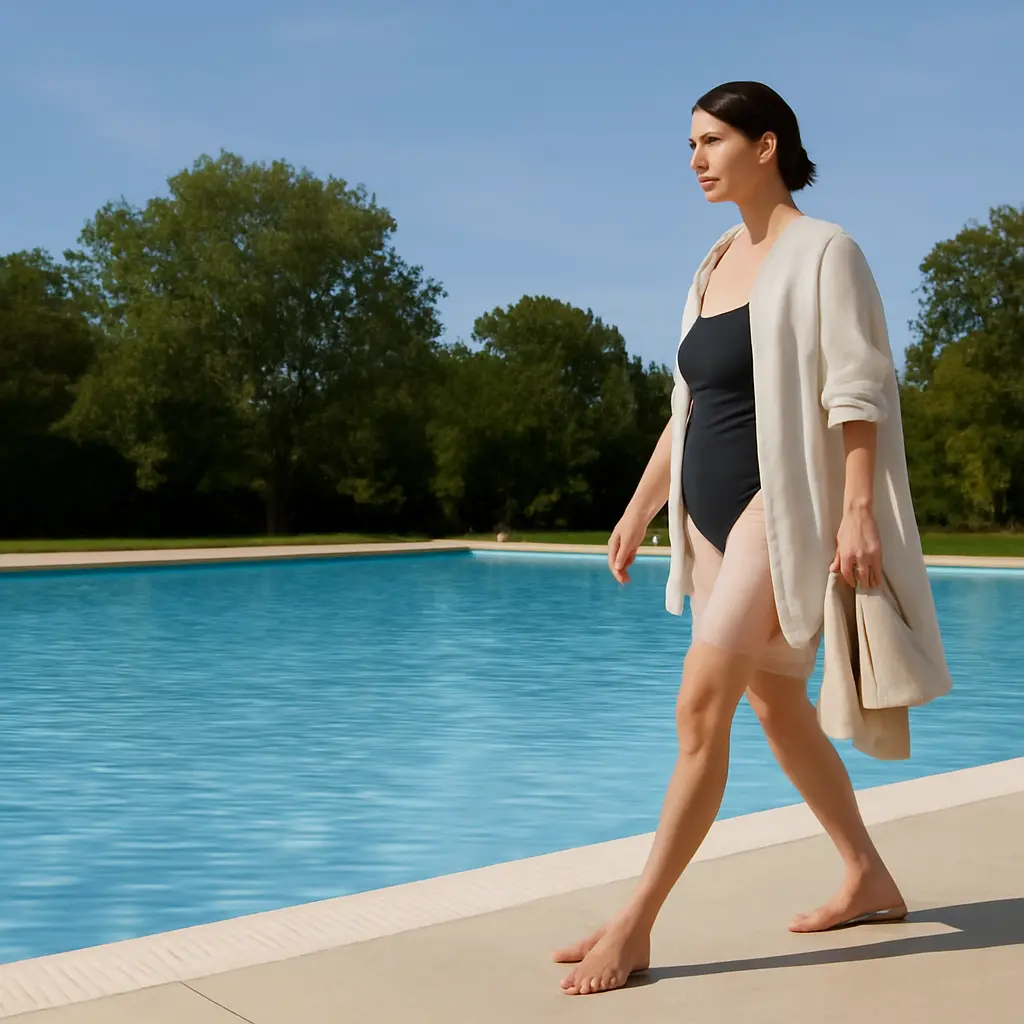
Swimming before breakfast and walking after dinner are two accessible ways to add movement to a day: one can provide a low-impact aerobic workout, while the other can make it easier to accumulate activity after an evening meal. Their benefits depend on pace, duration, health, and personal preference—not on a special requirement to exercise at those exact times. Public-health guidance recommends at least 150 minutes of moderate-intensity aerobic activity per week for most adults, making these routines practical options when they fit safely into a person’s schedule.
Morning Swims as a Pre-Breakfast Exercise Routine
A morning swim before breakfast is an aerobic exercise session performed before the day’s first meal. The American College of Sports Medicine describes aerobic activity as sustained movement that uses large muscle groups and can improve cardiorespiratory fitness when practiced regularly. Swimming is a low-impact form of that activity because water supports body weight, although its intensity can still range from gentle movement to vigorous training.
The Centers for Disease Control and Prevention (CDC) recommends that adults get at least 150 minutes of moderate-intensity activity each week, or 75 minutes of vigorous activity, alongside muscle-strengthening activity on two or more days. A swimmer might meet part of the aerobic target through several manageable sessions. The number of calories used varies considerably with body size, stroke, pace, and duration, so a single calorie estimate should not be treated as universal.
Fast-Fed and Fasted Swimming
“Fasted” swimming means entering the water after an overnight period without food; “fed” swimming means having eaten beforehand. These labels describe timing, not a guaranteed difference in fitness or fat loss. A 2020 systematic review and meta-analysis in the Journal of Science and Medicine in Sport found that eating before exercise can improve prolonged aerobic performance, while results depend on the type and duration of exercise. For a short, easy swim, some people feel comfortable before breakfast; others perform better after a small snack.
There is no need to swim fasted to gain health benefits. Anyone who feels dizzy, weak, nauseated, or unusually fatigued should stop, leave the pool safely, and consider food, fluids, or medical advice. People with diabetes, a history of fainting, pregnancy-related concerns, or conditions affected by blood glucose should discuss exercise and meal timing with a clinician.
Swim Intensity, Warm-Up, and Pool Safety
Moderate-intensity swimming generally raises breathing and heart rate while still allowing conversation in short phrases; vigorous swimming makes conversation difficult. A brief, easy warm-up followed by a pace suited to current ability can help swimmers settle into the session. Beginners can alternate swimming with rests rather than trying to maintain continuous laps.
Water safety matters regardless of fitness level. The CDC advises swimming with a buddy or where lifeguards are present, using designated swimming areas, and avoiding alcohol around water. Cold water, open-water currents, and fatigue add risks that do not apply in the same way to a supervised indoor pool. Swimmers should follow facility guidance and stop when conditions or symptoms make continuing unsafe.
After-Dinner Walks as an Evening Activity
An after-dinner walk is light-to-moderate walking undertaken following an evening meal. It can contribute to weekly physical-activity totals while providing a routine transition between dinner and the rest of the evening. Unlike swimming, walking requires little equipment and can be adapted to a neighborhood, indoor corridor, or treadmill.
The CDC’s activity guidance recognizes brisk walking as moderate-intensity exercise. The World Health Organization likewise recommends 150–300 minutes of moderate-intensity aerobic physical activity each week for adults, or an equivalent amount of vigorous activity. These are weekly targets, not a requirement to walk immediately after every meal; shorter bouts can still help people build an active routine.
Gentle Strolls and Brisk Walks
A gentle stroll is comfortable and restorative, while a brisk walk is purposeful enough to increase breathing and heart rate. Both may be useful, but brisk walking is more likely to count toward moderate-intensity activity. The CDC’s “talk test” offers a simple guide: at moderate effort, a person can talk but not sing comfortably.
Research also supports exploring light movement after meals for blood-glucose management. A 2022 systematic review and meta-analysis in Sports Medicine reported that post-meal physical activity, including walking, reduced postprandial glucose responses compared with remaining inactive, with timing and study protocols varying. This finding does not mean a walk replaces prescribed diabetes treatment, and people managing glucose should follow their clinician’s advice.
Timing, Comfort, and Digestive Symptoms
People often choose a short, easy walk after dinner because it is convenient, but there is no universal waiting period that everyone must observe. Comfort depends on meal size, walking pace, and individual digestion. A leisurely walk may feel fine soon after eating, whereas a demanding workout can be uncomfortable for some people after a large meal.
Those prone to reflux or abdominal discomfort can try a slower pace, a shorter route, or a little more time between eating and walking. Persistent or severe symptoms warrant medical guidance. For safety, use well-lit routes, wear visible clothing when appropriate, and choose stable footwear and surfaces.
Combining Morning Swims and Evening Walks
Pairing a morning swim with an after-dinner walk can distribute activity across the day and draw on the different strengths of each: swimming offers water-supported aerobic exercise, while walking is easy to repeat and requires minimal preparation. The CDC notes that activity can be accumulated in manageable amounts; consistency and total weekly movement matter more than adhering to a particular clock-time formula.
A Practical Weekly Pattern
A workable plan begins with current ability and available time. For example, an adult could schedule several moderate swims and add short walks on selected evenings, adjusting duration and pace to approach the recommended weekly activity range. This is an illustration, not a prescription: rest, mobility, strength training, and individual medical needs also belong in a balanced routine.
- Start with comfortable sessions and increase duration or intensity gradually.
- Keep pre-breakfast swims easy until you know how you respond to exercising without food.
- Use an evening walk as light movement or make it brisk enough to raise breathing for moderate activity.
- Track minutes, perceived effort, and symptoms rather than relying only on distance or calorie estimates.
- Choose safe facilities and routes, and adapt the plan for weather, sleep, and recovery.
Who Should Adapt the Routine
Most adults can choose activities according to preference, but the right starting point varies. People who are new to exercise, have chronic conditions, take medications that affect blood pressure or glucose, or have experienced chest pain, fainting, or unusual breathlessness should seek individualized medical advice before increasing activity. Older adults and people with mobility limitations may benefit from tailored guidance and accessible pools or walking routes.
A simple record can help reveal whether the routine is sustainable: note swim and walk duration, effort, sleep, and any discomfort for a few weeks. If a schedule repeatedly disrupts sleep or causes excessive fatigue, changing the timing or reducing intensity is a sensible adjustment. Exercise should support daily life, not become a test of willpower.
Conclusion: Make the Routine Safe, Enjoyable, and Repeatable
Morning swims before breakfast and sunset walks after dinner are complementary ways to build regular movement. Swimming can deliver low-impact aerobic exercise, while walking offers an adaptable opportunity to accumulate activity and may moderate post-meal glucose responses. Neither timing is essential, and fasted exercise is not required for health benefits. Use public-health activity targets as a guide, begin at a comfortable level, and prioritize water and route safety. For further guidance, consult the CDC and World Health Organization activity recommendations and speak with a healthcare professional when health conditions affect exercise or meal timing.
Sources: Centers for Disease Control and Prevention, “How Much Physical Activity Do Adults Need?”, https://www.cdc.gov/physical-activity-basics/guidelines/adults.html; World Health Organization, “Physical activity,” https://www.who.int/news-room/fact-sheets/detail/physical-activity; Centers for Disease Control and Prevention, “Preventing Drowning,” https://www.cdc.gov/drowning/prevention/; Aird, T. P., Davies, R. W., and Carson, B. P., “Effects of fasted vs fed-state exercise on performance and post-exercise metabolism: A systematic review and meta-analysis,” Journal of Science and Medicine in Sport, 2020, https://doi.org/10.1016/j.jsams.2019.12.006; Engeroff, T., et al., “The effects of postprandial exercise on glucose control in individuals with type 2 diabetes: A systematic review and meta-analysis,” Sports Medicine, 2022, https://link.springer.com/article/10.1007/s40279-022-01652-9.


