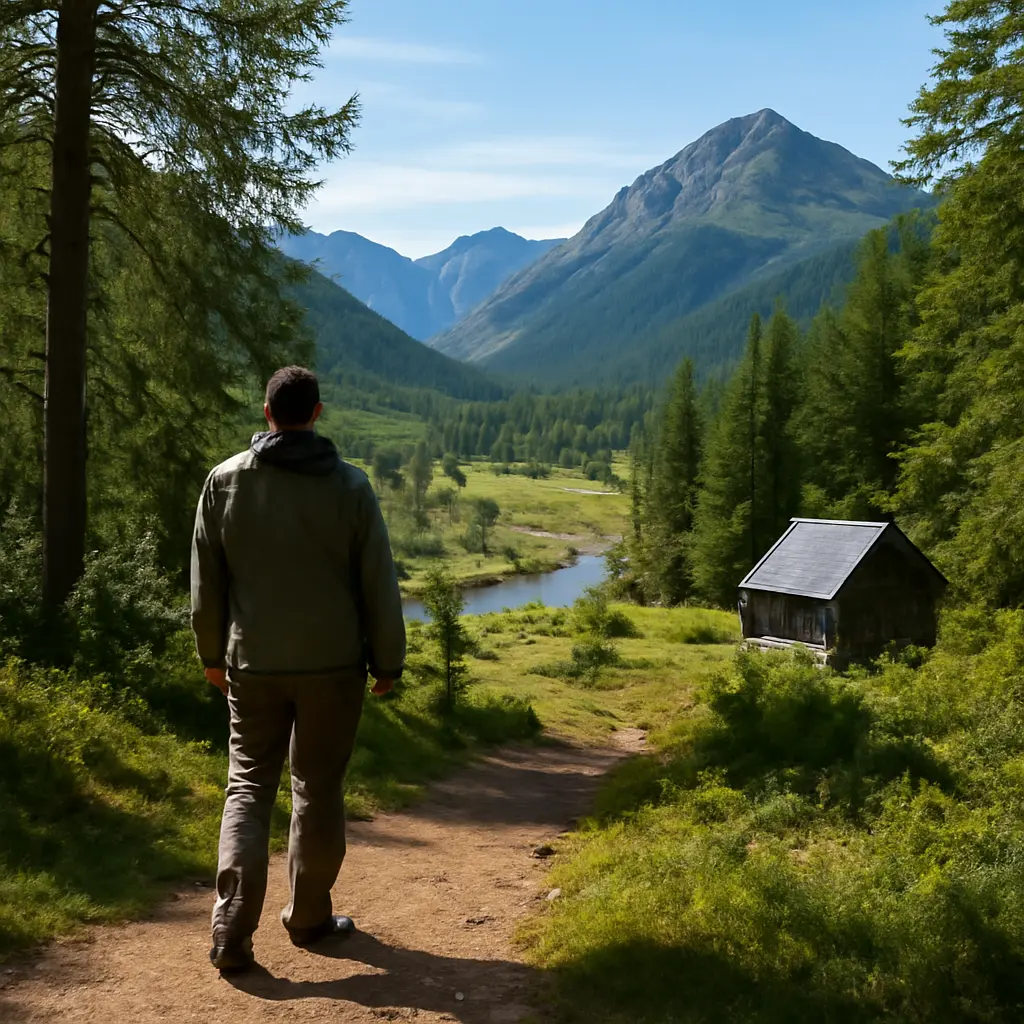
An intimate hotel nestled in nature is a small-scale place to stay whose setting, design, and guest experience are shaped by the surrounding landscape. Unlike an urban resort, which often emphasizes convenient access to city attractions and a broad menu of amenities, a nature-based retreat can offer something harder to manufacture in a city: quiet, direct contact with the outdoors, and a sense of separation from everyday routines. That distinction matters as travel demand grows: UN Tourism reported an estimated 1.4 billion international tourist arrivals in 2024, about 99% of the 2019 level. The case for intimate nature hotels rests not on size alone, but on how thoughtfully they connect guests with place, privacy, and responsible stewardship.
Intimate nature hotels deliver place-based experiences urban resorts cannot replicate
There is no single universal industry definition of an “intimate nature hotel.” For this article, the term describes a relatively small lodging property located in or near a natural landscape, where the setting and scale are central to the guest experience. The International Union for Conservation of Nature (IUCN) defines a protected area as a clearly defined geographical space recognized, dedicated, and managed to achieve the long-term conservation of nature. That definition helps explain the importance of context: a hotel can be close to a forest, coast, or mountain without itself being a conservation project, so its actual environmental practices should be assessed separately from its scenery.
Research supports the value of nature contact, while stopping short of proving that every nature stay produces a particular health outcome. The World Health Organization’s 2016 review, Urban green spaces and health, found evidence linking urban green space with mental and physical health benefits, while noting that outcomes depend on access, quality, and other factors. A stay in a natural setting may make outdoor experiences easier to access, but it is not a substitute for medical care or a guarantee of improved wellbeing.
Small scale creates a more personal relationship with place
Small scale is a relative characteristic, not a formal threshold. Fewer rooms can make it easier for a property to offer attentive service, quieter shared spaces, and activities suited to local conditions. Examples include a lodge with guided forest walks, a coastal inn that explains tidal habitats, or a mountain retreat that plans outings around weather and trail access. The benefit depends on execution: a small property can still be noisy, resource-intensive, or disconnected from its community.
Landscape becomes part of the stay
A nature hotel makes the surrounding environment part of the experience through views, outdoor access, local interpretation, and architecture that responds to its site. The National Park Service’s visitor research has long treated park visits as experiences shaped by natural and cultural resources, rather than simply by accommodation. A well-sited lodge can extend that sense of place with guided walks, wildlife observation, or locally informed food and design. The contextual bridge from landscape to experience is important: scenery alone is not the same as meaningful access, and sensitive locations require clear visitor guidance.
Intimate nature hotels provide a different kind of retreat
The contrast with urban resorts is best understood as a difference in emphasis, not a claim that one format is universally superior. Urban resorts commonly offer proximity to restaurants, museums, shopping, transport, and large amenity programs. Nature hotels tend to trade some of that convenience and choice for quieter surroundings, outdoor access, and a stronger connection to local ecology. The most suitable option depends on what a traveler values and how they intend to spend their time.
Quiet and privacy are designed into the setting
Privacy in a nature retreat comes from more than room size: building spacing, sound management, landscape design, and limits on group activity all shape the experience. A property with fewer rooms may feel secluded, but its location, occupancy, and layout matter more than a marketing label. Travelers seeking quiet should check whether rooms share walls, whether events are hosted on-site, and how far accommodations are from public roads or busy recreation areas.
Outdoor access turns downtime into active discovery
Nature-based lodging can make activities such as hiking, kayaking, birdwatching, or stargazing part of an ordinary day rather than a separate excursion. The Outdoor Industry Association’s 2024 Outdoor Participation Trends Report estimated that 175.8 million Americans participated in outdoor recreation in 2023, or 57.3% of the U.S. population aged six and older. This is evidence of broad interest in outdoor activity, not proof that all participants prefer remote hotels. Still, it helps explain why lodging that provides safe, convenient access to outdoor experiences appeals to many travelers.
Local identity can replace a standardized resort experience
A place-based stay may draw on regional food, architecture, materials, stories, and local guides. These details can help guests understand where they are rather than encountering a largely interchangeable hospitality product. The UN Environment Programme and the World Tourism Organization have highlighted tourism’s potential to support local economies, alongside risks such as resource pressure and uneven distribution of benefits. Travelers can look for evidence of local hiring, purchasing, cultural consultation, and transparent community partnerships rather than assuming that a rustic aesthetic automatically benefits residents.
Nature hotels work best when intimacy is matched by stewardship
A quiet setting can conceal real environmental costs. Lodging uses energy and water, generates waste, and may contribute to habitat disturbance or transport emissions. The United Nations Environment Programme identifies tourism as a sector with significant climate and resource impacts, while also emphasizing opportunities to reduce them. Because impacts vary by location and operation, responsible travel requires more than choosing a property with a nature-themed name.
Conservation claims should be specific and verifiable
Responsible stewardship means taking measurable steps to protect the ecosystems and communities that make a destination attractive. Useful signs include habitat protection plans, wildlife-viewing rules, water-efficiency measures, waste reduction, and public reporting or credible third-party certification. The Global Sustainable Tourism Council’s criteria provide a framework for evaluating sustainable destination and hotel practices, covering management, socioeconomic benefits, cultural impacts, and environmental effects. Certification is not the only evidence of good performance, but clear targets and independent verification are more informative than vague claims such as “eco-friendly.”
Low-impact design protects the experience over time
Low-impact design adapts buildings and operations to the site rather than treating the landscape as a blank canvas. That may mean limiting construction footprints, preserving vegetation, using efficient heating and cooling, managing stormwater, and planning for local water availability. The World Resources Institute’s Aqueduct tools illustrate how water risk differs by basin, reinforcing why a hotel’s water practices should be judged in local context. A property in a water-stressed region faces different responsibilities from one in a water-abundant area.
Visitor limits and local partnerships reduce pressure
A nature hotel’s small size does not automatically make its footprint small: concentrated visitor traffic can still affect trails, shorelines, wildlife, and nearby communities. Capacity planning, seasonal closures, trained guides, and clear wildlife-distance rules can help reduce those pressures. The IUCN’s protected-area guidance emphasizes that conservation depends on effective management, not designation alone. For guests, choosing guided activities, following local rules, and spending with locally owned businesses can support more responsible tourism.
Choosing an intimate nature hotel requires more than reading the view description
Travelers can compare a nature retreat with an urban resort by asking what the trip is meant to deliver: easy access to cultural attractions, broad amenities, restorative quiet, outdoor activity, or a combination. A useful checklist is to examine the property’s location, access and transport options, environmental practices, community relationships, and the specific experiences included in the stay. This approach helps distinguish a genuinely place-connected hotel from one that relies mainly on scenery in its marketing.
- Check how the hotel manages energy, water, waste, and habitat impacts.
- Look for specific conservation or community commitments, with measurable outcomes where available.
- Ask whether activities are led by qualified local guides and follow wildlife and land-access rules.
- Consider transport emissions and whether public transit, shared transfers, or longer stays are practical.
- Read recent guest feedback for information about noise, access, seasonal conditions, and service expectations.
Conclusion: intimate nature hotels offer value through connection, not just seclusion
Intimate hotels nestled in nature can offer what urban resorts generally cannot reproduce: immediate access to a particular landscape, a quieter rhythm, and experiences grounded in local ecology and culture. Their appeal is reinforced by widespread participation in outdoor recreation and research on the benefits associated with access to green space, though neither makes a nature stay a guaranteed route to wellbeing. The strongest properties pair personal scale and outdoor access with credible environmental management and meaningful local partnerships. Before booking, compare the experience you want with the hotel’s actual practices, and seek transparent evidence that its presence supports rather than erodes the place that draws you there.
Sources: UN Tourism, “International tourism recovers pre-pandemic levels in 2024,” https://www.unwto.org/news/international-tourism-recovers-pre-pandemic-levels-in-2024; International Union for Conservation of Nature, “Protected Areas,” https://www.iucn.org/our-work/protected-areas-and-land-use; World Health Organization Regional Office for Europe, Urban green spaces and health: A review of evidence, 2016, https://www.who.int/europe/publications/i/item/WHO-EURO-2016-3352-43111-60341; National Park Service, Visitor Use Statistics, https://irma.nps.gov/Stats/; Outdoor Industry Association, 2024 Outdoor Participation Trends Report, https://outdoorindustry.org/resource/2024-outdoor-participation-trends-report/; United Nations Environment Programme and World Tourism Organization, Making Tourism More Sustainable: A Guide for Policy Makers, https://www.unep.org/resources/report/making-tourism-more-sustainable-guide-policy-makers; Global Sustainable Tourism Council, GSTC Criteria, https://www.gstcouncil.org/gstc-criteria/; World Resources Institute, Aqueduct Water Risk Atlas, https://www.wri.org/aqueduct.