A secluded vacation rental can offer privacy without guaranteeing complete independence: the owner, caretaker, cleaner, or property manager may still need access for maintenance, emergencies, or legal compliance. Private-stay autonomy means understanding and agreeing on how much control guests have over their space, schedule, communication, and interactions with staff before booking. That distinction matters in a market where Airbnb reported more than 491 million nights and experiences booked in 2023: clear descriptions, precise access rules, and written confirmation help travelers choose a property that matches their expectations while helping hosts protect safety and privacy.
Private-Stay Autonomy Defines Guest Control and Service Boundaries
Private-stay autonomy is the degree to which guests can use a rental independently while knowing when and how the host or service team may enter, communicate, or provide assistance. It is not a standardized legal term; in practical booking decisions, it combines the listing’s privacy claims with specific arrangements for access, housekeeping, deliveries, maintenance, and emergency response. The American Hotel & Lodging Association’s operational guidance on hotel security emphasizes safeguarding guests and managing access, while short-term rentals require comparable clarity tailored to a private home or secluded property.
The key distinction is between a private booking and an unstaffed or wholly independent stay. A property can be exclusively reserved for one party and still have shared grounds, on-site caretakers, scheduled services, or owner access under stated conditions. Booking platforms likewise distinguish entire-place listings from private rooms and shared rooms, but those labels alone do not explain how staff access works.
Exclusive use is not the same as unrestricted access
Exclusive use generally means the booked accommodation is reserved for the guest’s party. It does not automatically mean that every area is private or that nobody may enter under any circumstances. A driveway, garden, pool, dock, or path may be shared, and hosts may retain access for repairs or urgent needs. Before booking, ask which spaces are exclusively yours, which are shared, and whether any staff live or work on the premises.
Autonomy has practical, measurable dimensions
Guests can assess autonomy through concrete questions: Is check-in self-service? Is housekeeping optional? Are there scheduled staff visits? Can the host enter without prior notice except in an emergency? Does the property have reliable cellular service or internet for contacting assistance? These details turn a broad promise of privacy into expectations both sides can verify.
Access Policies Clarify Private-Stay Autonomy
An access policy states who may enter the accommodation, for what purpose, under what notice, and with what limits. It is the central service boundary for secluded stays because remote locations can make maintenance and emergency access more complicated. In the United States, local rules and the booking platform’s terms may affect notice, safety, and accommodation requirements; guests should read the listing and applicable house rules rather than assume one universal standard.
Owner, caretaker, and contractor entry
A caretaker may be present to manage a gate, check equipment, or respond to problems, but presence does not necessarily mean continuous guest service. Ask whether the person has a separate residence or works in shared areas, and whether entry into the booked interior requires advance notice. Request that routine work be scheduled with you and that emergency entry be limited to urgent situations such as fire, flooding, or a credible safety threat.
Housekeeping and optional services
Housekeeping can range from a full daily service to checkout-only cleaning. Clarify whether linen changes, rubbish removal, pool care, or groundskeeping require staff to enter private areas. If services are optional, confirm how to decline them and whether doing so changes the price. A written schedule prevents a surprise visit from being mistaken for an intrusion—or a guest’s request for privacy from being mistaken for refusal of necessary maintenance.
Smart locks, cameras, and monitoring devices
Digital access systems can make arrival easier, but guests should know what information is collected and where cameras or other monitoring devices are located. Airbnb’s policy prohibits cameras and recording devices monitoring indoor spaces, including devices that are switched off, while requiring hosts to disclose permitted exterior cameras and other monitoring devices in listings. Check the current platform rules and local law, and ask for clarification if a device’s location or purpose is unclear.
Service Boundaries Match Support to the Property’s Remoteness
Service boundaries describe what assistance the host provides, how guests request it, and what response they can reasonably expect. Seclusion may mean fewer nearby services, longer repair times, or limited communications—not an absence of support. The U.S. Federal Communications Commission’s broadband reports document continuing differences in connectivity availability, especially across rural areas, so travelers should verify the actual connection and backup options rather than relying on a general “remote work” or “connected” claim.
Response times and emergency procedures
A useful support plan names the primary contact, an alternate contact, and the method to use if a phone call or app message fails. Ask how quickly the host normally responds, who handles after-hours problems, and what guests should do for urgent medical, fire, or security emergencies. Response-time estimates are service expectations, not guarantees of emergency-service arrival; in an immediate emergency, contact the local emergency number first where available.
Utilities, access roads, and essential supplies
Remote properties may rely on wells, septic systems, generators, private roads, or limited deliveries. Before booking, ask about drinking-water arrangements, heating and cooling, backup power, road conditions, snow or flood access, and the location of basic supplies. The U.S. Environmental Protection Agency notes that private wells are not regulated under the federal Safe Drinking Water Act in the same way as public water systems, making it especially important to ask the owner about testing and maintenance where a property uses a private well.
Connectivity and realistic digital expectations
“Wi-Fi available” does not specify speed, reliability, or mobile coverage. Guests who need to work, coordinate transport, or reach help should ask for recent speed-test results, whether the connection is shared, and whether a mobile carrier signal or satellite service provides a backup. If the host cannot verify these details, treat connectivity as uncertain rather than assuming the property can support video calls or emergency communication.
Listing Claims and Guest Questions Verify Expectations
A listing is a starting point, not a substitute for confirming important details. Booking.com’s accommodation guidance and Airbnb’s Help Center both direct travelers to review property information and communicate with hosts through the platform. Keeping questions and answers in the booking channel creates a useful record if actual conditions differ from what was described.
Read privacy language precisely
Terms such as “secluded,” “private,” “self-contained,” and “contactless” can describe different things. “Secluded” may refer to distance from neighbors; “contactless” may refer only to check-in; and “private” may describe the accommodation rather than every outdoor amenity. Look for the precise listing category, floor plan or site description, shared-space disclosures, and stated service schedule.
Ask focused questions before paying
Send concise questions that invite specific answers. For example: “Will anyone enter the booked interior during our stay, and under what circumstances?” “Are the pool and garden exclusive to our party?” “Is housekeeping included or optional?” “Who is available after hours, and what is the backup contact?” “Are there cameras or other monitoring devices, and where are they?” The answers help compare properties on actual service arrangements rather than marketing language.
Use a booking checklist
- Confirm which rooms, outdoor areas, and facilities are exclusive or shared.
- Get the routine and emergency entry rules in writing.
- Clarify housekeeping, maintenance, and caretaker schedules.
- Check camera disclosures, smart-lock procedures, and data-related concerns.
- Verify connectivity, utilities, road access, and emergency contacts.
- Keep material communications on the booking platform and review cancellation terms.
A Secluded Stay Illustrates the Value of Clear Boundaries
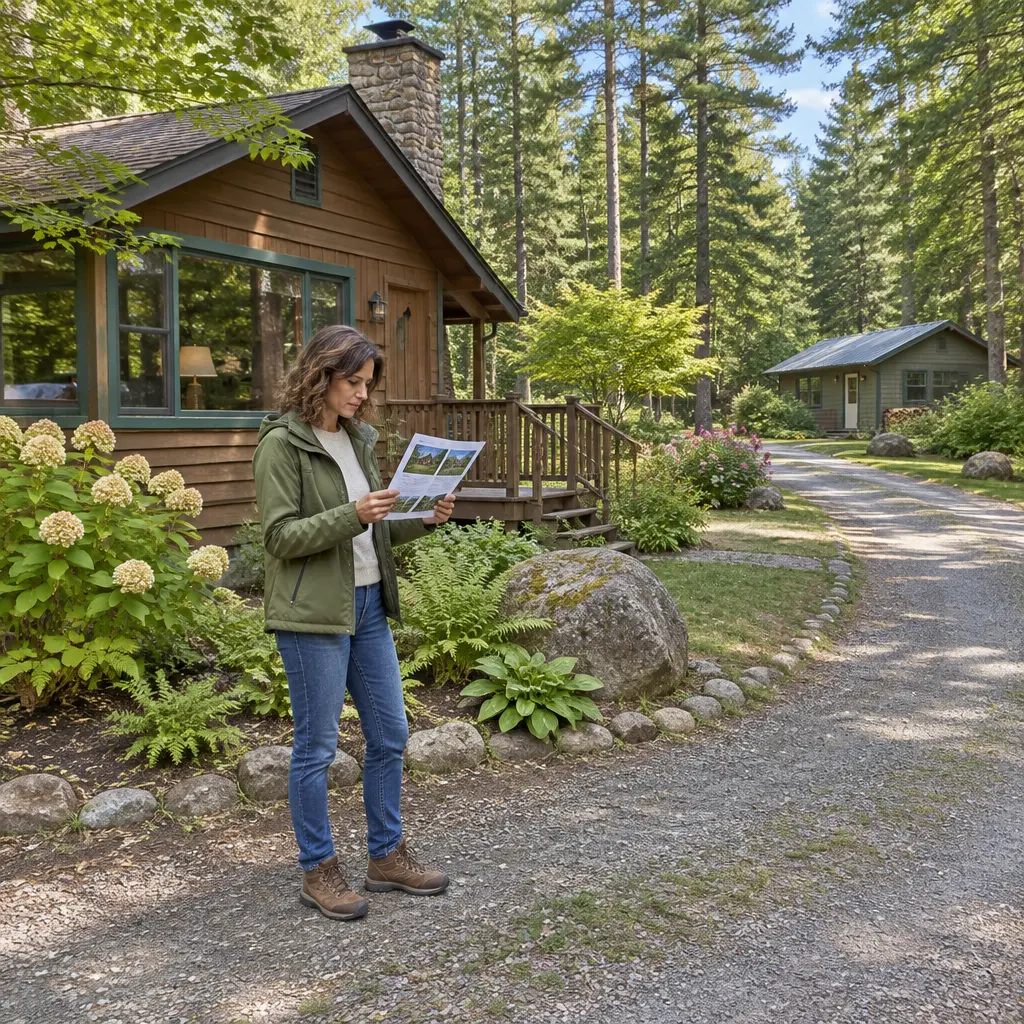
Consider a cabin advertised as a private woodland retreat. The cabin may be reserved exclusively, while a caretaker occupies a separate building, crosses the shared driveway each morning, and checks the generator when weather is severe. Without clarification, guests might interpret “private” as no staff presence at all. With a written explanation of the caretaker’s role, visit schedule, access limits, and emergency contact process, the same arrangement can be comfortable and predictable.
This example also shows why privacy and safety are not opposites. A clear boundary can protect guest solitude while ensuring someone can address a water leak, power failure, or blocked access road. The best arrangement is not necessarily the one with the fewest services; it is the one whose services, access, and response expectations match the guest’s needs and are disclosed before payment.
Conclusion: Confirm Autonomy Before Booking
Private-stay autonomy depends on more than a secluded location or an “entire place” label. Guests should verify exclusive-use areas, staff and owner access, housekeeping, monitoring devices, support response, connectivity, utilities, and emergency procedures. Platform policies and local requirements provide important guardrails, but the listing and direct, documented answers establish what to expect at a particular property.
Before booking, ask specific questions and save the answers in the platform’s messaging system. Hosts can strengthen trust by describing service boundaries plainly and updating listings when arrangements change. For further guidance, consult the booking platform’s current privacy and safety policies, local accommodation rules, and relevant public-agency advice on water, communications, and emergency preparedness.
Sources: Airbnb, 2023 Year-End Financial Results, https://news.airbnb.com/airbnb-q4-2023-and-full-year-financial-results/; Airbnb, Privacy Policy: Cameras and Recording Devices, https://www.airbnb.com/help/article/3061; Airbnb, Help Center, https://www.airbnb.com/help; American Hotel & Lodging Association, Safe Stay Initiative, https://www.ahla.com/safe-stay; Booking.com, Help Centre, https://www.booking.com/customer-service.html; Federal Communications Commission, Fourteenth Broadband Deployment Report, https://www.fcc.gov/reports-research/reports/broadband-progress-reports/fourteenth-broadband-deployment-report; U.S. Environmental Protection Agency, Private Drinking Water Wells, https://www.epa.gov/privatewells.